
 Top Handpieces
 High Tech
 Loupes & Headlights
 Surgery
 Curing Lights
Dental Loupes and LED Headlights
Choosing Dental Loupes & Headlights
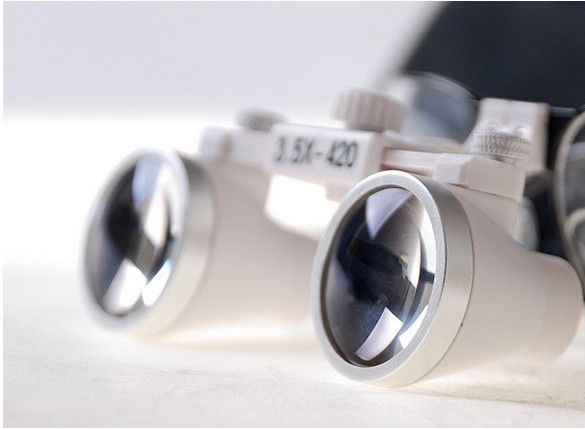
Choosing the right combination of dental loupes and headlights comes down to balancing ergonomics, visual clarity, and daily workflow.
Performing high-precision restorative work, complex endodontic therapy, or meticulous surgical procedures under inadequate lighting and poor posture takes a heavy, cumulative toll on a clinician’s body. For decades, spinal discomfort and eye strain were quietly accepted as inevitable side effects of a long dental career. Modern magnification and advanced LED illumination have completely rewritten that reality.
Pairing high-resolution optical loupes with an ultra-bright, lightweight headlight system isn’t just about seeing better—it is about transforming your physical wellbeing, elevating your clinical speed, and drastically improving treatment outcomes for your patients. This comprehensive guide breaks down everything you need to know about selecting, fitting, and investing in the ultimate optical setup for your practice.
Choosing Dental Loupes & Headlights: Why Loupes Are an Ergonomic Necessity
Chronic musculoskeletal pain is the single leading reason for early practitioner retirement in modern dentistry. Spending hours bent over an operatory chair with a flexed neck, rounded shoulders, and a twisted spine places intense static strain on the cervical spine and lumbar region. Over time, this leads to chronic neck spasms, herniated discs, tension headaches, and debilitating upper back discomfort.
┌─────────────────────────────────────────────────────────────┐
│                 POSTURAL IMPACT OF MAGNIFICATION            │
├──────────────────────────────┬──────────────────────────────┤
│ Unaided Vision (Naked Eye)   │ Loupe-Assisted Precision     │
├──────────────────────────────┼──────────────────────────────┤
│ Severe forward head tilt     │ Upright, neutral spine       │
│ Unconscious slouching        │ Relaxed neck and shoulders   │
│ Focal fatigue and eye strain │ Sharp, effortless clarity    │
│ High chronic pain risk       │ Extended career longevity    │
└─────────────────────────────────────────────────────────────┘
Optical loupes act as an ergonomic circuit breaker for your body. By bringing the operating field directly to your eyes at a crystal-clear resolution, magnification eliminates the unconscious urge to hunch forward over the patient’s mouth.
Maintain a Neutral Spine: Proper loupes enforce a healthy, upright posture where your ears, shoulders, and hips remain naturally aligned.
Reduce Muscle Fatigue: Operating in an upright posture keeps your neck and back muscles relaxed, stopping chronic tension before it begins.
Protect Your Eyesight: Instead of straining your ocular muscles to resolve micro-cracks or margin imperfections, high-index glass lenses project an enlarged, razor-sharp field of view with minimal focal effort.
By protecting your body from repetitive physical trauma, investing in quality magnification is a direct investment in your physical health, daily comfort, and overall career longevity.
Finding Your Power: Choosing the Ideal Magnification Level
Selecting the correct magnification is a balance between visual detail, field width, and overall comfort. Moving up in power increases detail, but narrows your working area and reduces depth of field. Matching the magnification power to your specific clinical focus ensures optimal speed and comfort.
| Magnification | Ideal Clinical Applications | Visual Characteristics |
| 2.5x – 3.0x | Hygiene, general diagnostics, routine exams | Extra-wide field of view, deep focal depth, seamless adjustment for first-time loupe users. |
| 3.5x – 4.5x | Crown & bridge, operative dentistry, cosmetics | High-definition margin clarity, ideal balance between detail and maneuverability for general dentists. |
| 5.0x – 6.0x+ | Endodontics, microsurgery, complex implantology | Maximum optical power for identifying micro-canals and intricate surgical site prep. |
If you are buying your first pair of loupes for general restorative work, starting at 3.5x magnification provides a crisp, detailed view of tooth margins without sacrificing the spatial awareness needed to navigate the mouth efficiently.
Precision Tailoring: Working Distance, Pupillary Distance & Field of View
A high-performance loupe must be custom-tailored to your unique facial geometry and physical height. An ill-fitted pair will cause eye strain, neck pain, and headaches. Here is how your three core measurements determine optical performance:
Working Distance (WD)
Working distance is the exact distance measured from your eyes to the patient’s oral cavity when you are sitting in a comfortable, ergonomically correct posture.
DETERMINING YOUR WORKING DISTANCE:
1. Sit upright with relaxed, dropped shoulders
2. Keep hips at 90°-100° and feet flat on the floor
3. Position hands comfortably at working position
4. Measure the distance from the bridge of the nose to the patient’s tooth
Never alter your posture to fit a fixed loupe distance; the loupe optics must be set to your natural posture. Most adult clinicians require a working distance between 350 mm and 500 mm (14 to 20 inches).
Pupillary Distance (PD)
Pupillary distance measures the exact space in millimeters between the centers of your pupils. Accurate PD measurement ensures that the optical centers of both lenses align perfectly with your eyes. If the PD is off by even 1 mm, you will experience double vision, eye fatigue, and severe focal disorientation.
Field of View (FOV) & Depth of Field (DOF)
-
Field of View: The total diameter of the treatment area visible through the optics. A wider field allows you to view an entire quadrant at once without moving your head.
-
Depth of Field: The distance range over which the image remains sharply in focus without moving closer or farther away. A generous depth of field allows minor patient movements without throwing the image out of focus.
Illuminating the Field: Essential Features of Top-Tier LED Headlights
Even the finest optical lenses are useless without clear, shadow-free illumination. Ambient operatory lighting and traditional overhead dental lights are easily blocked by the clinician’s head or hands, casting dark shadows into posterior teeth and narrow canals. A mounted LED headlight directs a high-intensity, shadowless beam parallel to your line of sight.
When choosing a modern headlight system, prioritize these four critical engineering features:
1. Ultra-Lightweight Build
Every fraction of a gram mounted on the bridge of your nose or safety frame matters during long procedures. Modern LED light heads weigh under 10 to 15 grams, eliminating nose bridge pressure, slipping, and front-heavy balance issues.
2. High-Output, Uniform Spot Quality
Look for headlights that deliver between 30,000 and 50,000 Lux of uniform, edge-to-edge brightness. High-quality optics cast a clean, circular spot without dark spots, halo distortion, or color separation at the edges.
3. True Wireless Design
Cables snagging on operatory chairs, tangling in face shields, or pulling on your frame can break your concentration. Advanced wireless LED headlights attach directly onto the bridge or frame of your loupes using compact, magnetic battery pods. They offer true freedom of movement without the hassle of hip-pack cords.
4. Extended Battery Life & Quick Swaps
A professional LED headlight system should easily power through an active clinical day. Look for systems featuring hot-swappable lithium-ion batteries that supply 2 to 4 hours of continuous run time per pod and include a multi-bay charging dock for effortless power management.
Visual Accuracy: Why Color Temperature Matters More Than Pure Brightness
When comparing dental headlights, brightness is only half the equation. The Color Temperature—measured in Kelvin (K)—and the Color Rendering Index (CRI) dictate how accurately you see subtle anatomical differences in tooth structure and oral tissue.
| Kelvin Rating | Light Appearance | Clinical Effect |
| < 4,000 K (Warm) | Yellowish / Dim | Low contrast, eye strain |
| 5,500 K – 5,700 K | Pure Sunlight (Ideal) | True shade, high contrast |
| > 6,500 K (Cool/Blue) | Harsh / Bluish Tint | Distorts shades, causes premature resin curing |
The Power of Natural Daylight (5,500K – 5,700K)
The human eye is biologically tuned to process daylight. Headlights engineered in the 5,500K to 5,700K range reproduce true natural sunlight. This neutral color spectrum renders soft tissue, enamel, dentin, and marginal decay with high color contrast, making diagnostic evaluation effortless.
Avoiding High-Kelvin Blue Light
Cheaper LED headlights often boast extreme Lux ratings by over-driving blue spectrum light (6,500K to 7,500K+). This harsh, bluish light introduces several clinical drawbacks:
Shade Distortion: Bluish light washes out natural yellow and warm tones in dentin and enamel, leading to inaccurate composite shade matching.
Severe Ocular Strain: High blue-spectrum light causes intense glare, drying out the eyes and causing retinal fatigue during long procedures.
Premature Composite Curing: Blue light frequencies trigger photoinitiators (like Camphorquinone) in light-cure composite resins, causing your restorative materials to skin over and harden prematurely while you work.
Pro Tip: Look for a headlight equipped with an integrated curing filter (an orange flip-down filter) that blocks curing wavelengths so you can shape composites smoothly without prematurely setting the material.
The Bottom Line: Think of Loupes & Headlights as an Investment, Not an Expense
It is easy to view high-end optics and LED lighting as a significant capital expense, but experienced clinicians view them as an essential, revenue-generating investment.
Faster Prep Times: Shadowless clarity accelerates daily clinical work and margin prep.
Fewer Remakes: High-resolution vision catches marginal flaws before impressions are taken.
More Chairside Energy: Eliminating physical pain keeps you focused and energized throughout the day.
Extended Career: Prevents chronic spinal injury, costly medical leave, and premature burnout.
Consider the direct return on investment (ROI) that a custom loupe and headlight setup brings to your practice:
-
Higher Precision, Fewer Remakes: Seeing crisp, 3.5x magnified margins under 40,000 Lux of shadowless light leads to better impressions, tighter-fitting restorations, and far fewer costly remakes.
-
Enhanced Clinical Efficiency: Clear visual access eliminates hesitation. You can locate calcified endodontic canals, verify cavity prep margins, and finish crown preps faster and with greater confidence.
-
Reduced Sick Days & Longevity: Eliminating chronic back and neck pain keeps you healthy and energized throughout the working week, preventing lost revenue from medical leave or early retirement.
Upgrading your optical equipment isn’t just about purchasing hardware—it is an upgrade to your posture, your clinical accuracy, and your daily joy in practicing dentistry.